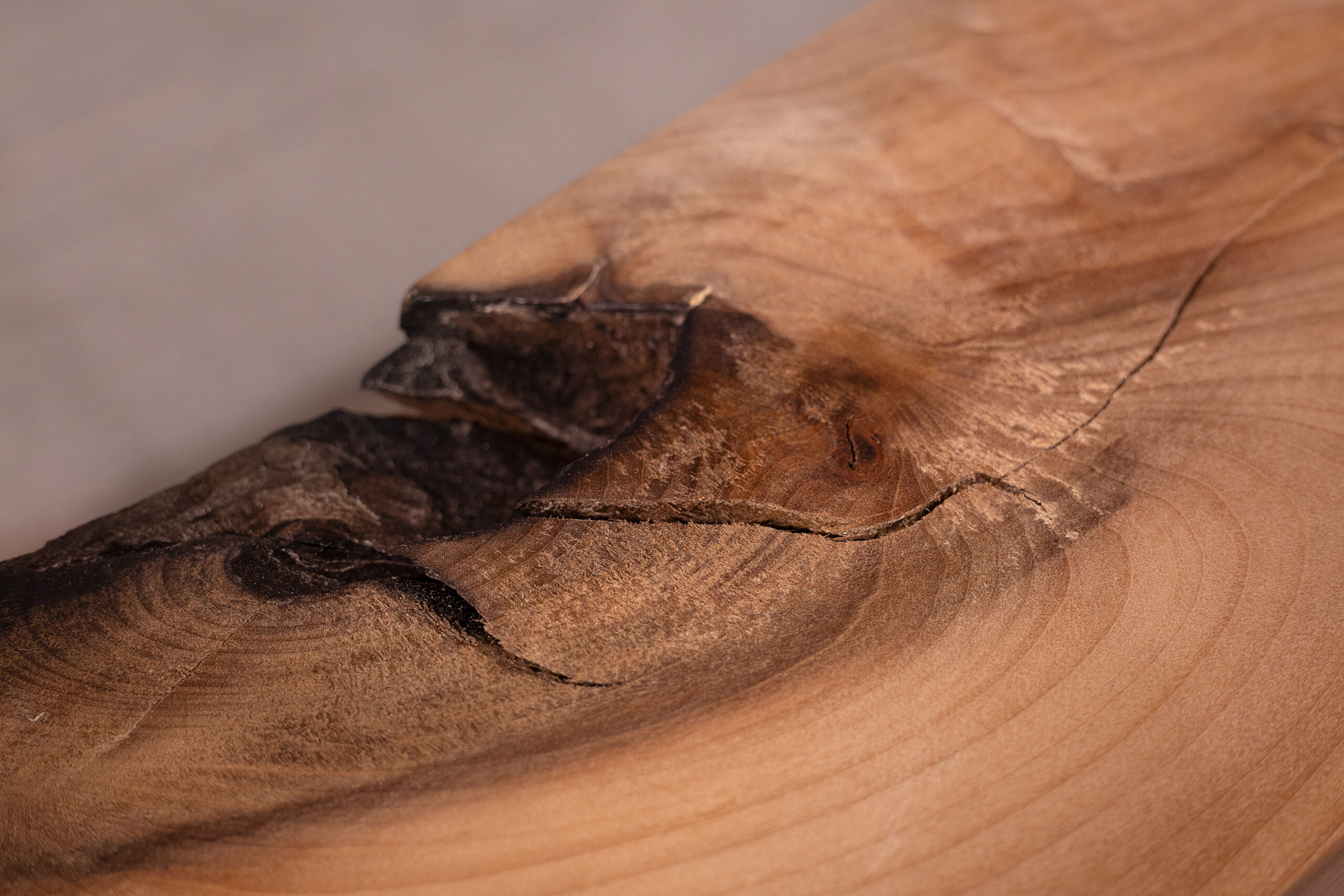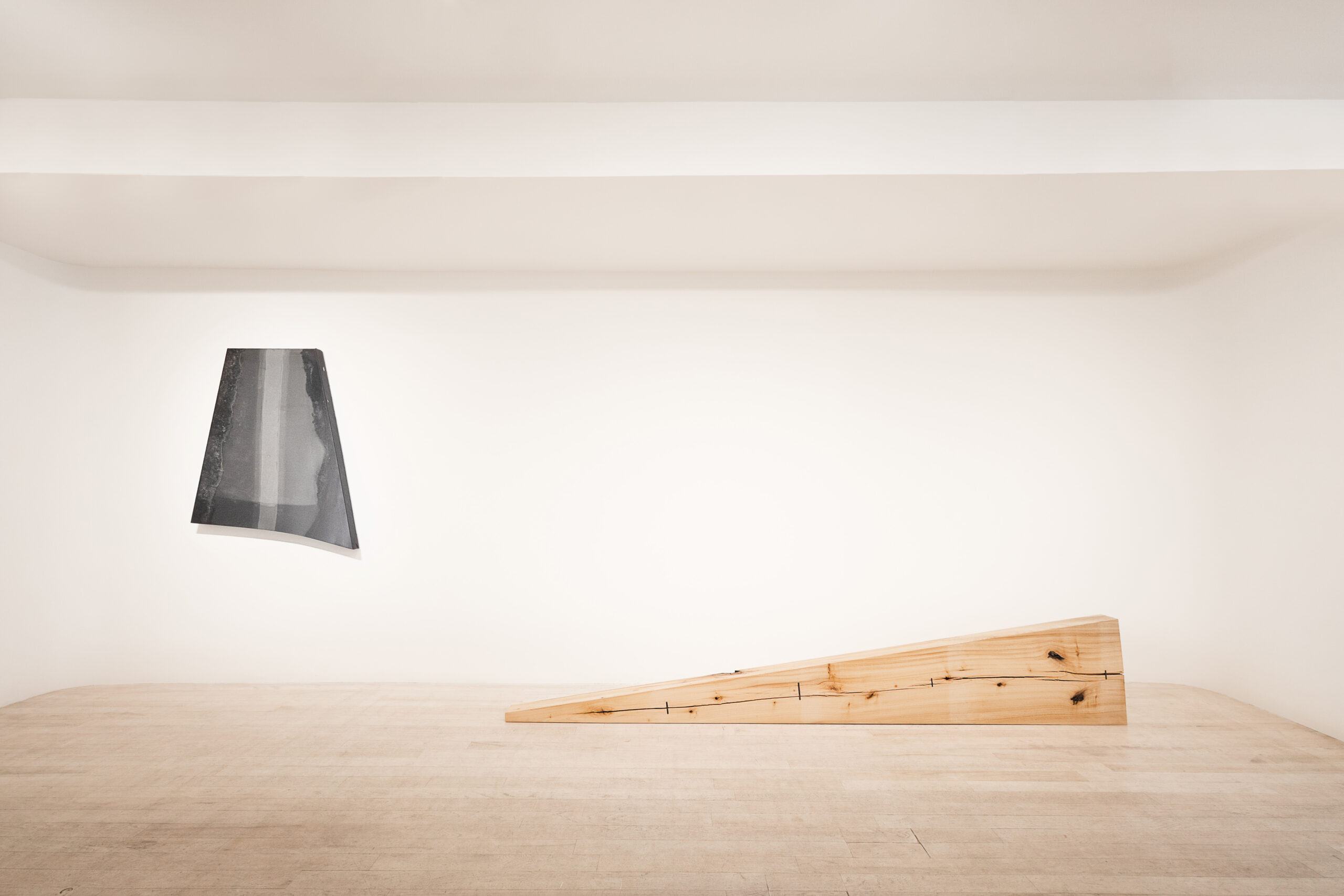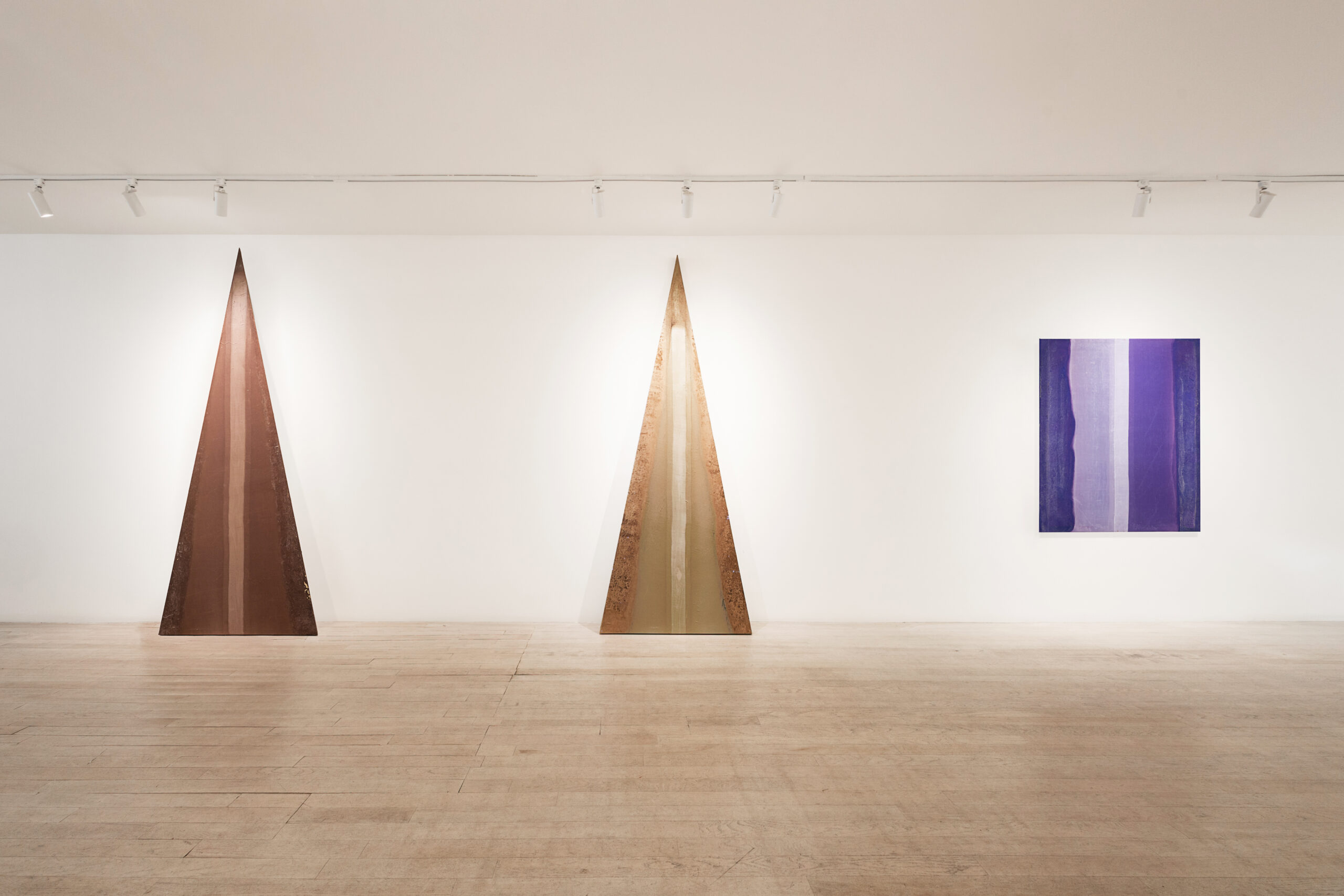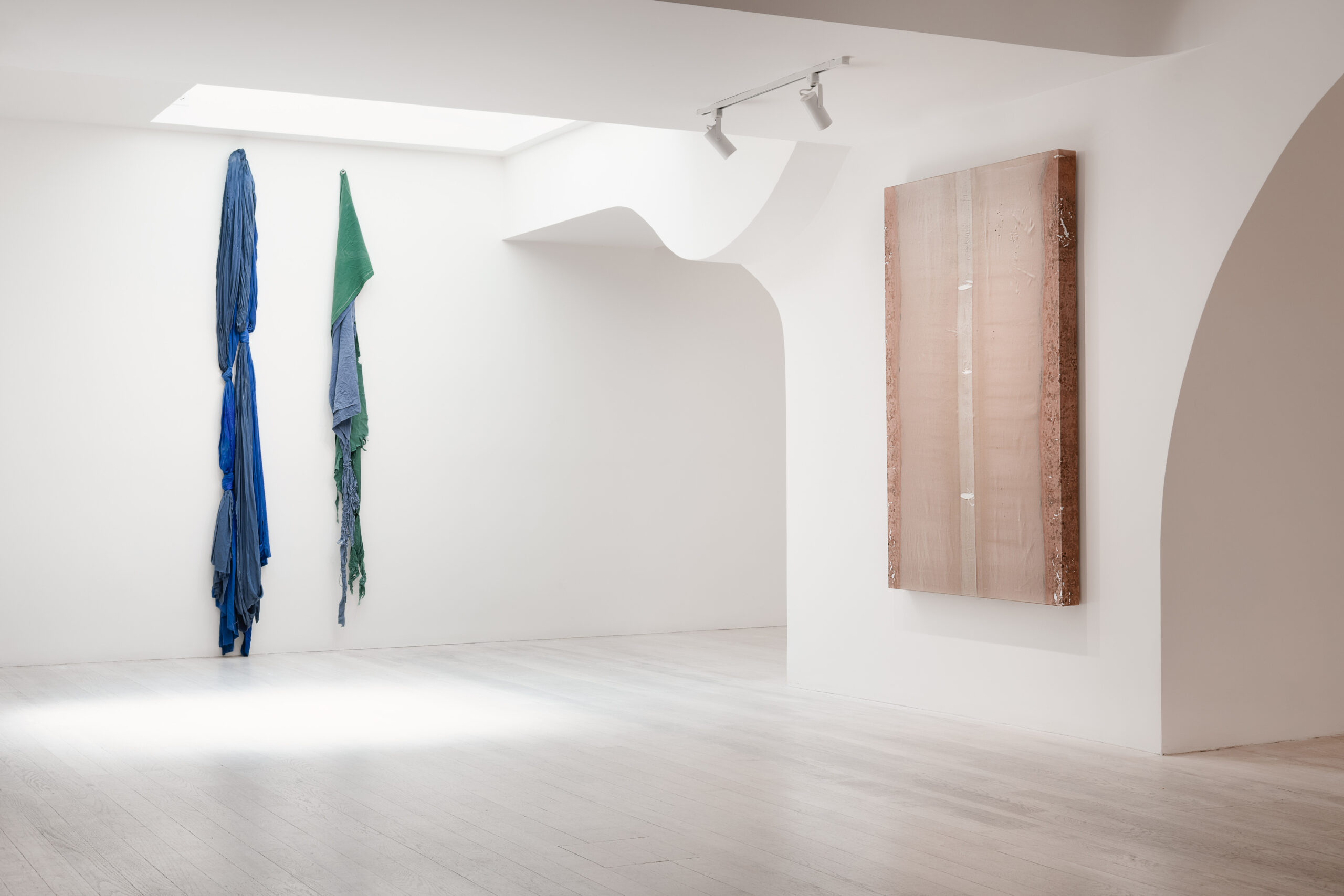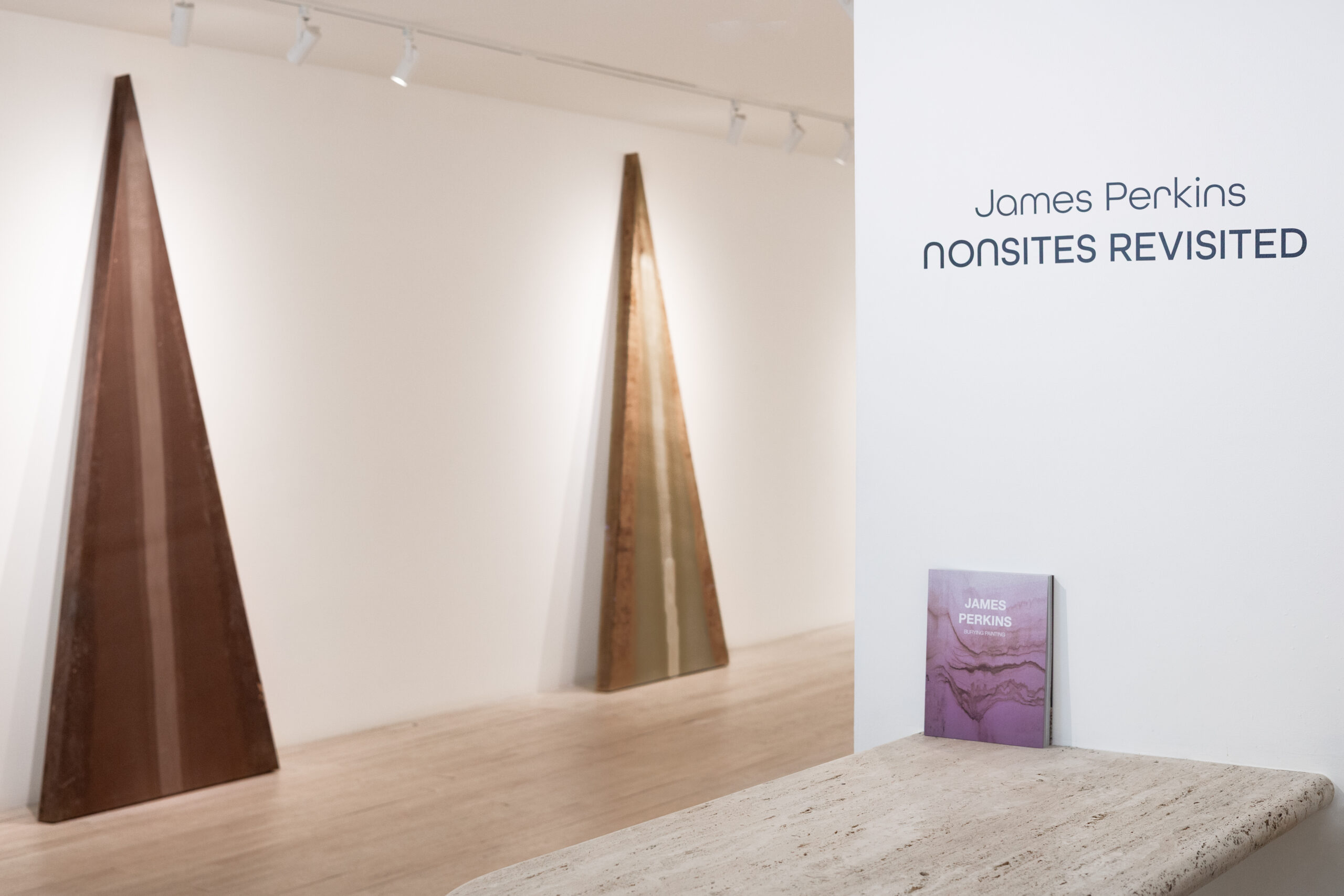
Hannah Traore Gallery is pleased to present Nonsites Revisited, the gallery’s second solo exhibition by New York-based artist James Perkins. Continuing Perkins’ decade-long exploration of the nonsite, a term originated by Robert Smithson in 1968, the exhibition expands a land-based practice concerned with the relationship between place, material, and human intervention. While the works in James’ first exhibition with the gallery, BURYING PAINTING, emerged primarily from Fire Island, Nonsites Revisited extends across a wider range of geographies. Works in the exhibition were shaped on Fire Island, in the Gulf of Mexico, the Sonoran Desert, the mountains and salt flats of Utah, and the middle of the Atlantic Ocean. A floor sculpture incorporates storm-fallen pine sourced from the Hudson Valley. Together, the works trace an evolution in Perkins’ approach to material, form, performance, and installation while returning the proposition at the heart of his practice: the Earth is the first object we share.
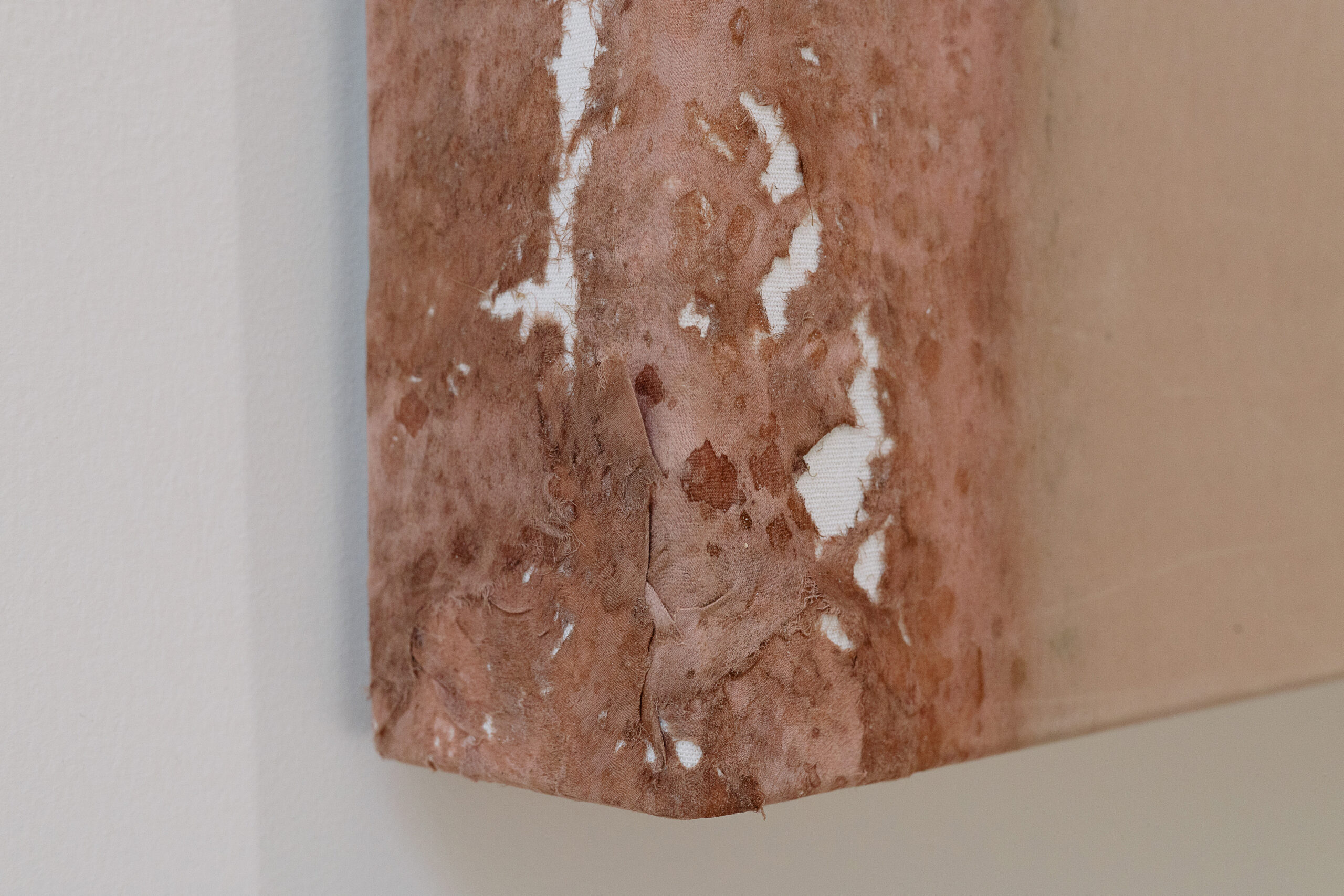
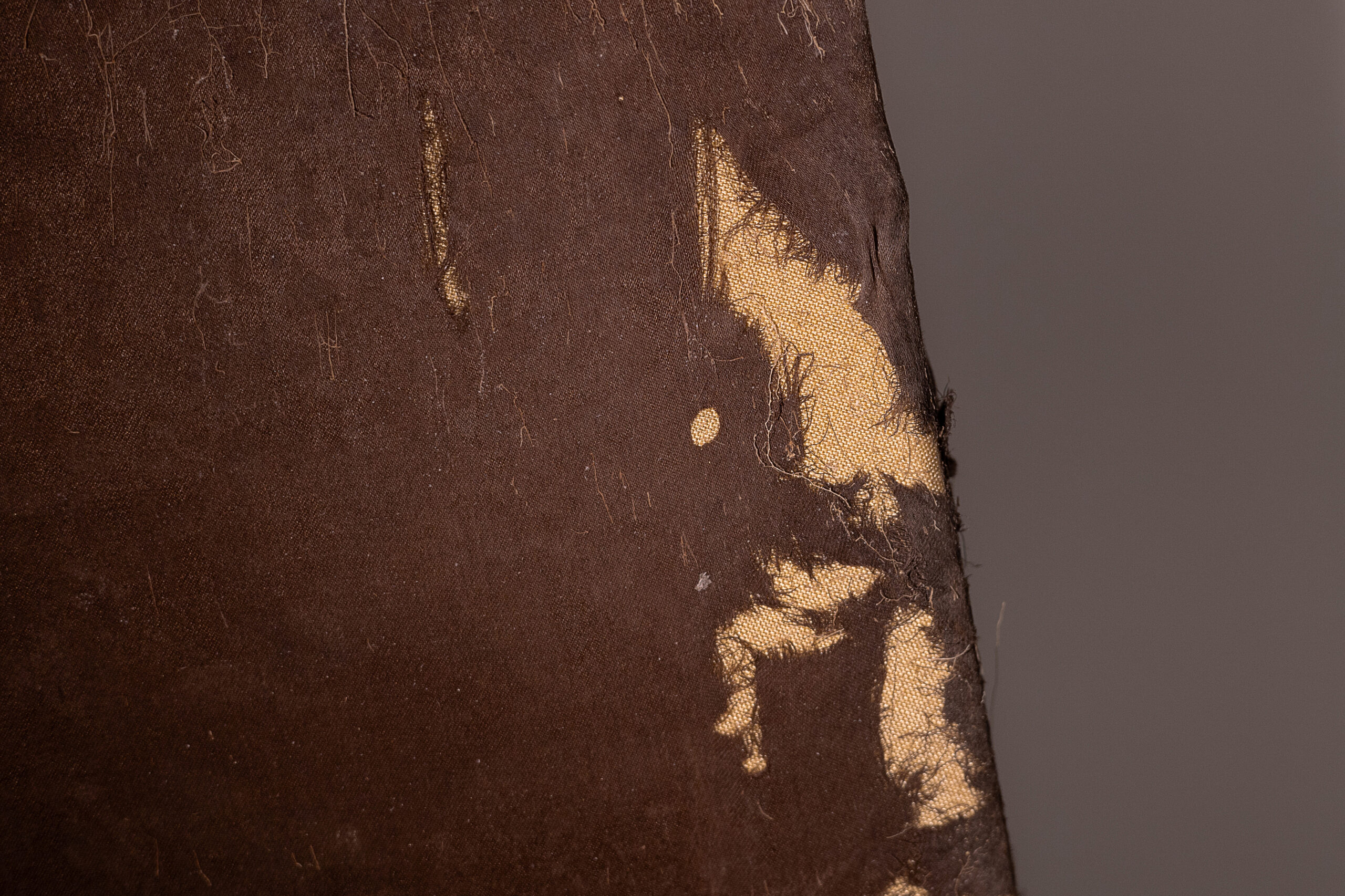
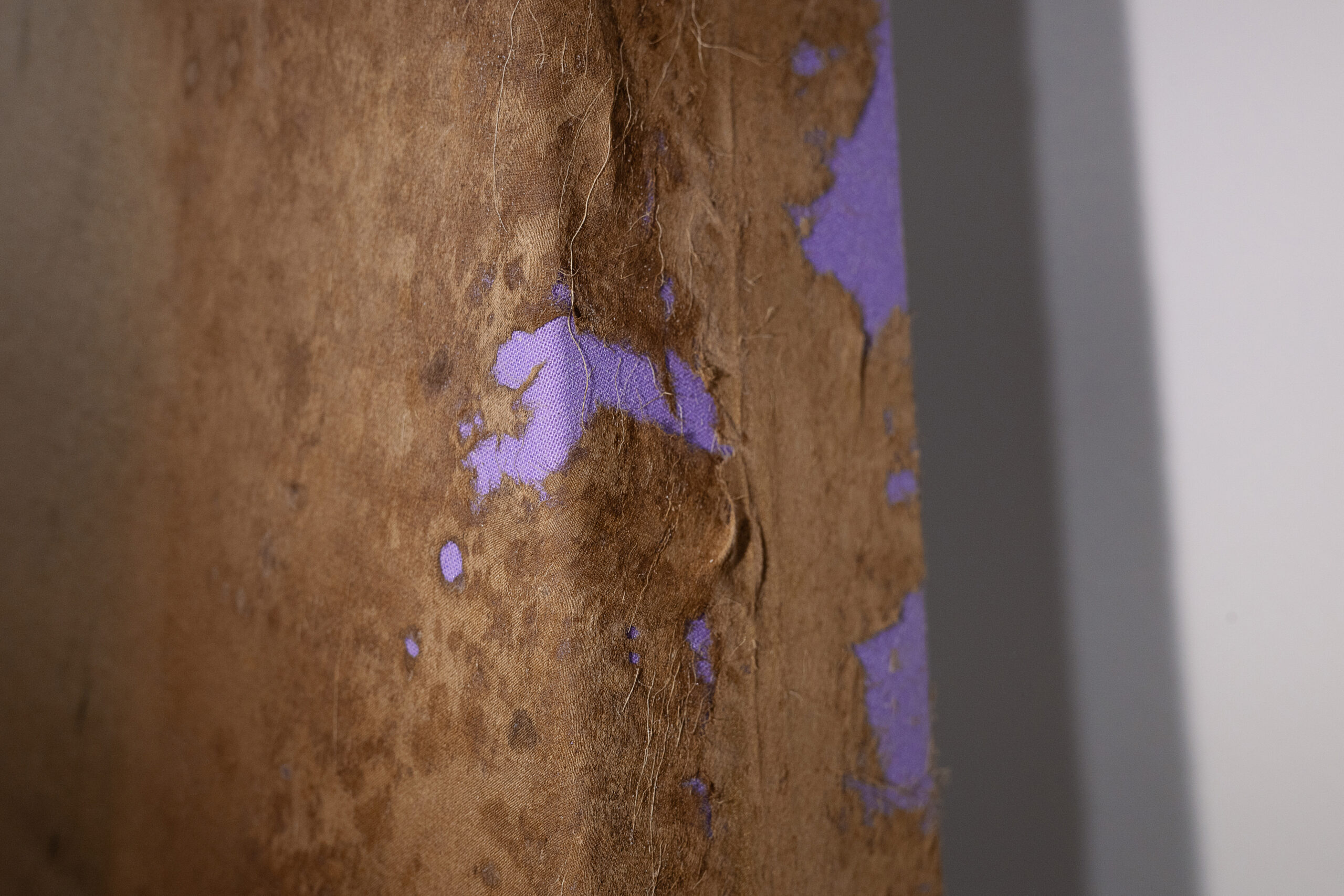
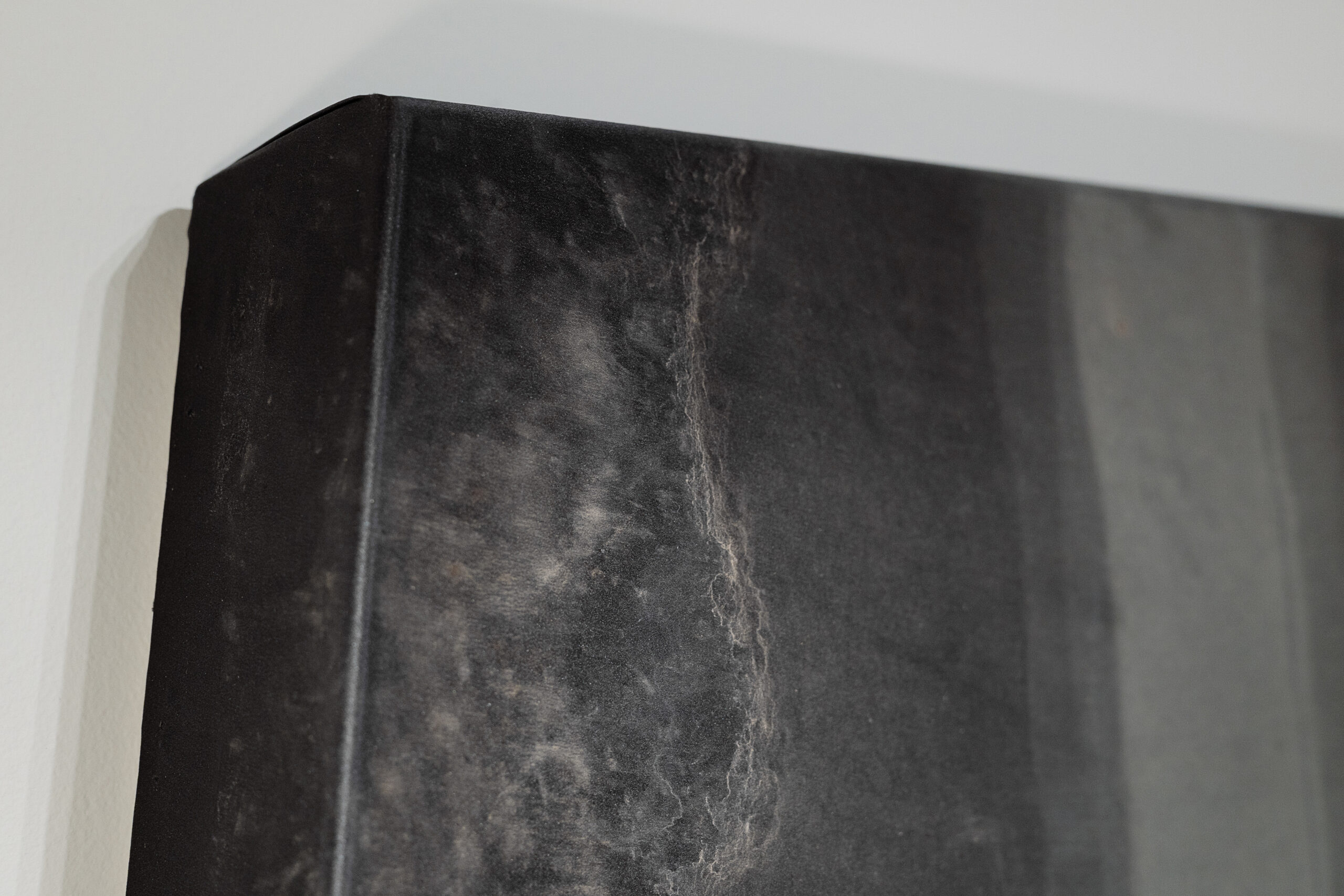
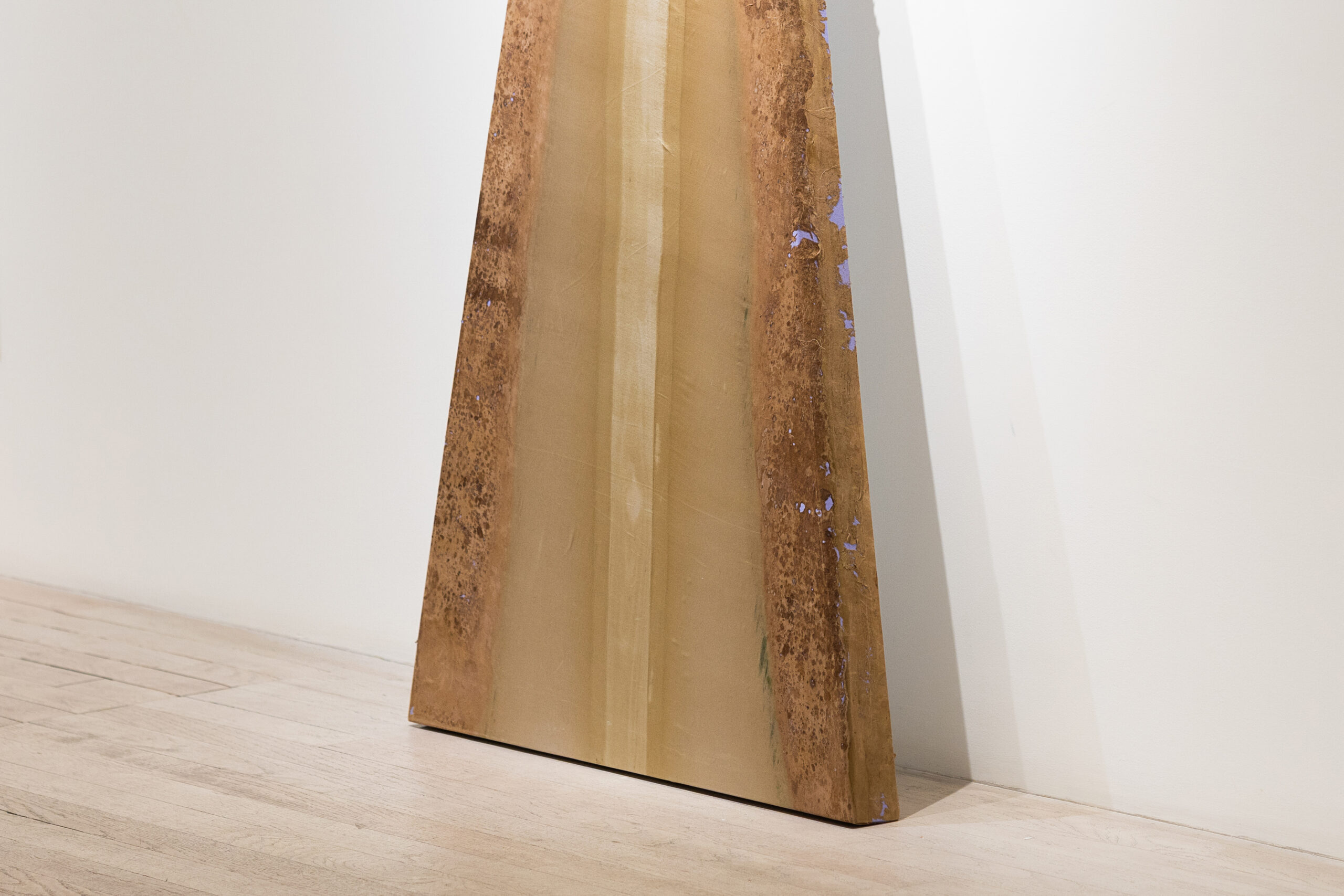
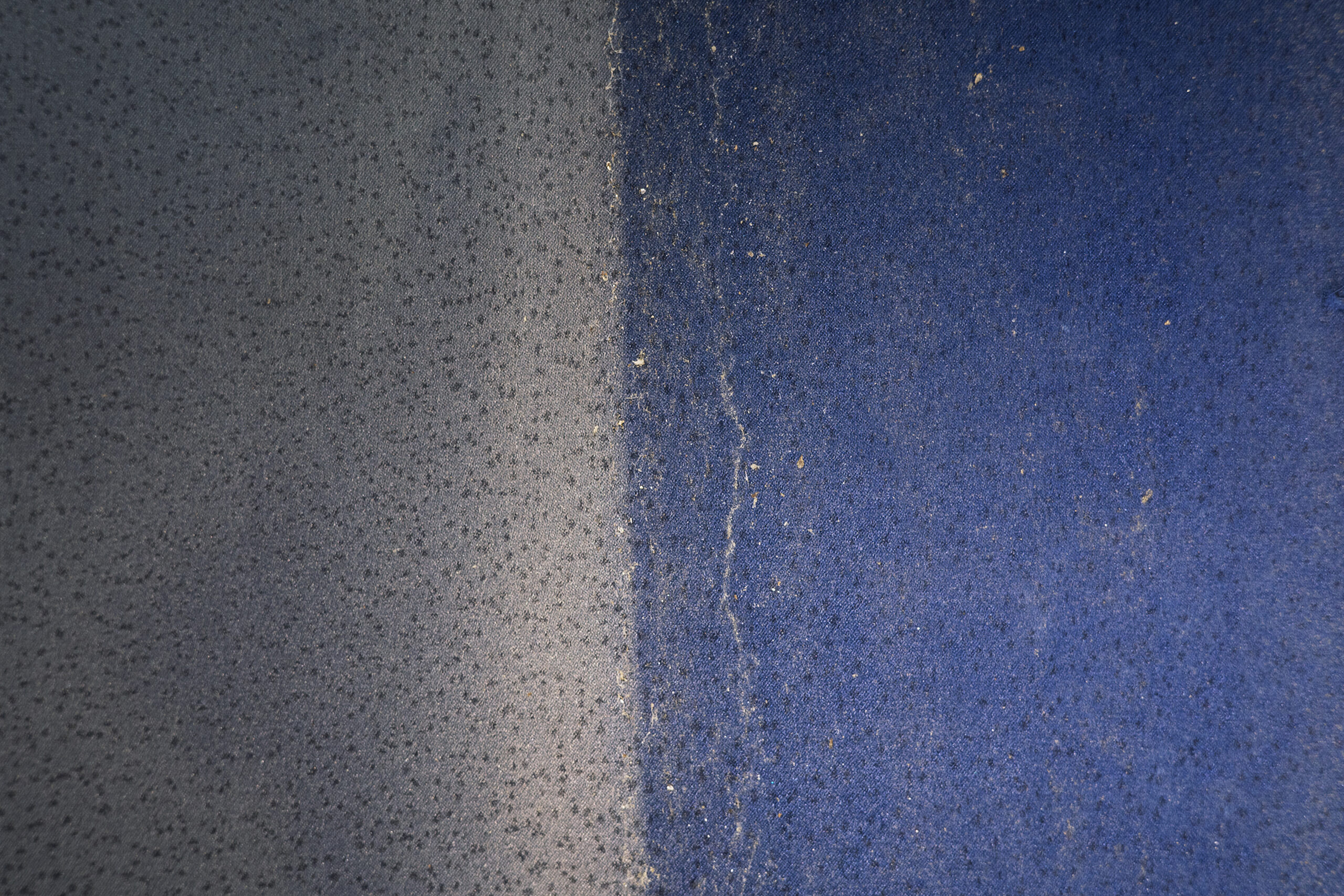
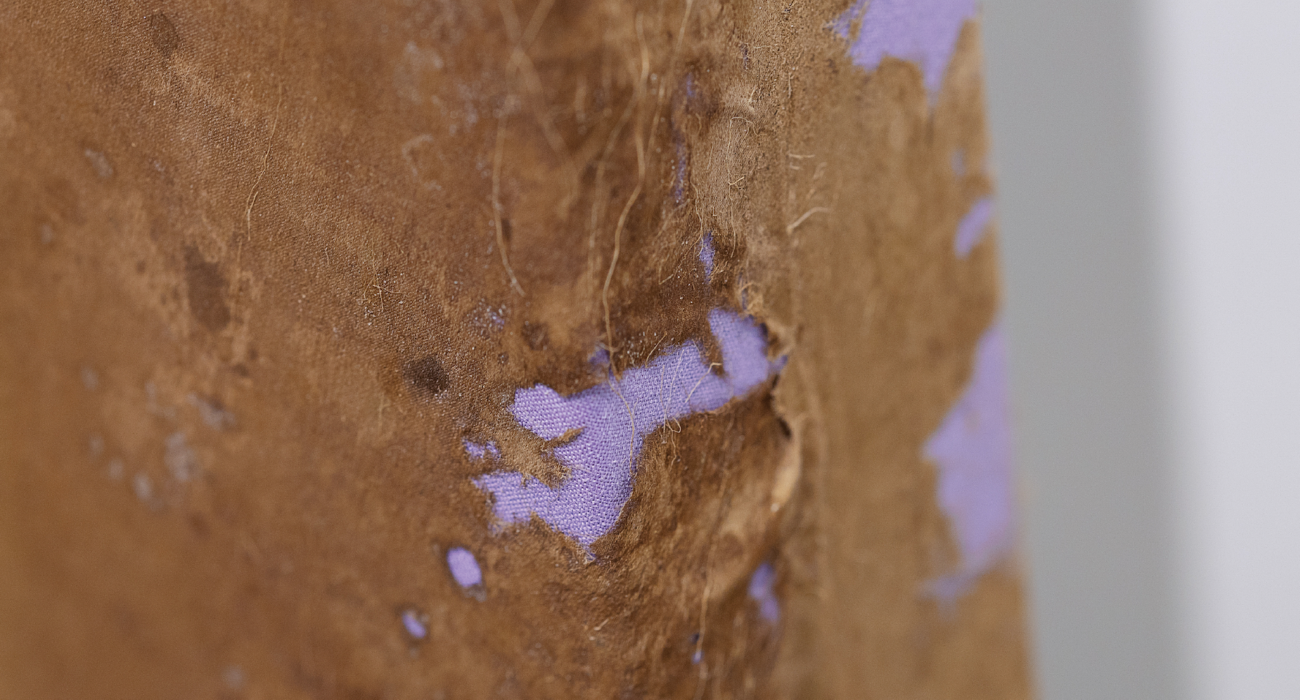
Perkins’ works begin as what he calls “post-totem structures”: silk stretched over wooden frames and situated outdoors for months or years. Buried in earth, submerged in water, or exposed across deserts, forests, mountains, and beaches, the works are shaped by sun, salt, wind, sand, soil, water, plants, and other environmental forces. Perkins’ interventions are limited to how he positions and repositions the structures within each landscape, allowing the environment itself to create the gestures that accumulate on the silk. Sustainability is embedded in this process: the structures are made from materials that can biodegrade if left in the landscape, their transformation continuing until Perkins chooses to preserve a particular moment as a work of art. Eventually, the silk is removed and re-stretched as a painting, carrying the physical record of the landscape in which it was made. For Perkins, this process also complicates the relationship between artist and environment: “There’s an element of them that’s much bigger than me,” he says, “which I would be proud to share the authorship with.”
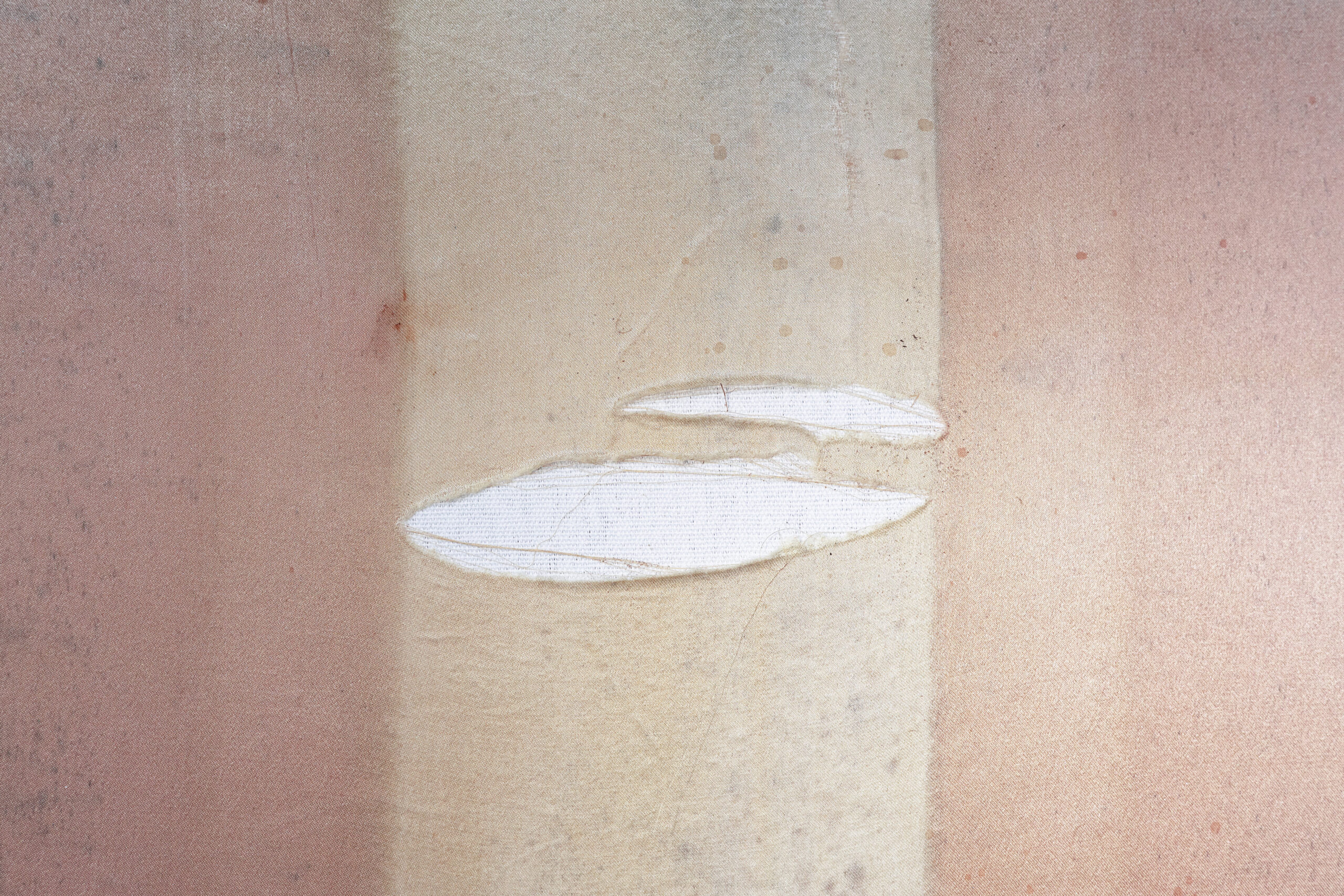
In Nonsites Revisited, each landscape acts not simply as a setting but as a condition of the work. Perkins increasingly arrives at sites through invitation, allowing their geography, histories, and communities to shape both the work and his experience of making it. I’m Tied in Knots Over This and Life Line emerged from Nonsite: Atlantic Passage, during which Perkins’ silk canvases sailed with skipper Conrad Colman in the 2022 Route du Rhum, a 3,542-nautical-mile solo transatlantic race from Saint-Malo, France, to Pointe-à-Pitre, Guadeloupe. Carried aboard the racing sailboat throughout the 13-day passage, the silks were exposed to the wind, salt, and conditions of the open Atlantic. Other works emerged from the desert, the Gulf of Mexico, the mountains and salt flats of Utah, and Fire Island. In Engulfed in Love: An Eagle’s Ode to Lucio Fontana, three splits down the center of the silk were made by an eagle while the work was situated on Fire Island, evoking Lucio Fontana’s iconic slashed canvases. “All the sites, they’re working on me,” Perkins says. “Each site works on my practice. It works on me as an artist. It works on me as a human.” Across these distinct terrains, the works return to Perkins’ belief in the equal value of the landscapes from which they emerge.
BURYING PAINTING, Perkins described Earth as “the object that we all share,” adding, “I hope we can learn to share better.” Four years later, Nonsites Revisited continues that sentence. As his practice expands across increasingly varied landscapes, the nonsite becomes a means of considering the value we assign to different places and, by extension, to the people who inhabit them. “It’s this kind of equality of all landscapes, and this equality of all people, no matter what landscape they are from,” Perkins says. “My nonsites are this metaphor for trying to respect all lands equally.” Against a culture driven by immediacy and the demand for the new, Perkins embraces revisiting as a way for ideas, artworks, and our relationships to the Earth to deepen over time.
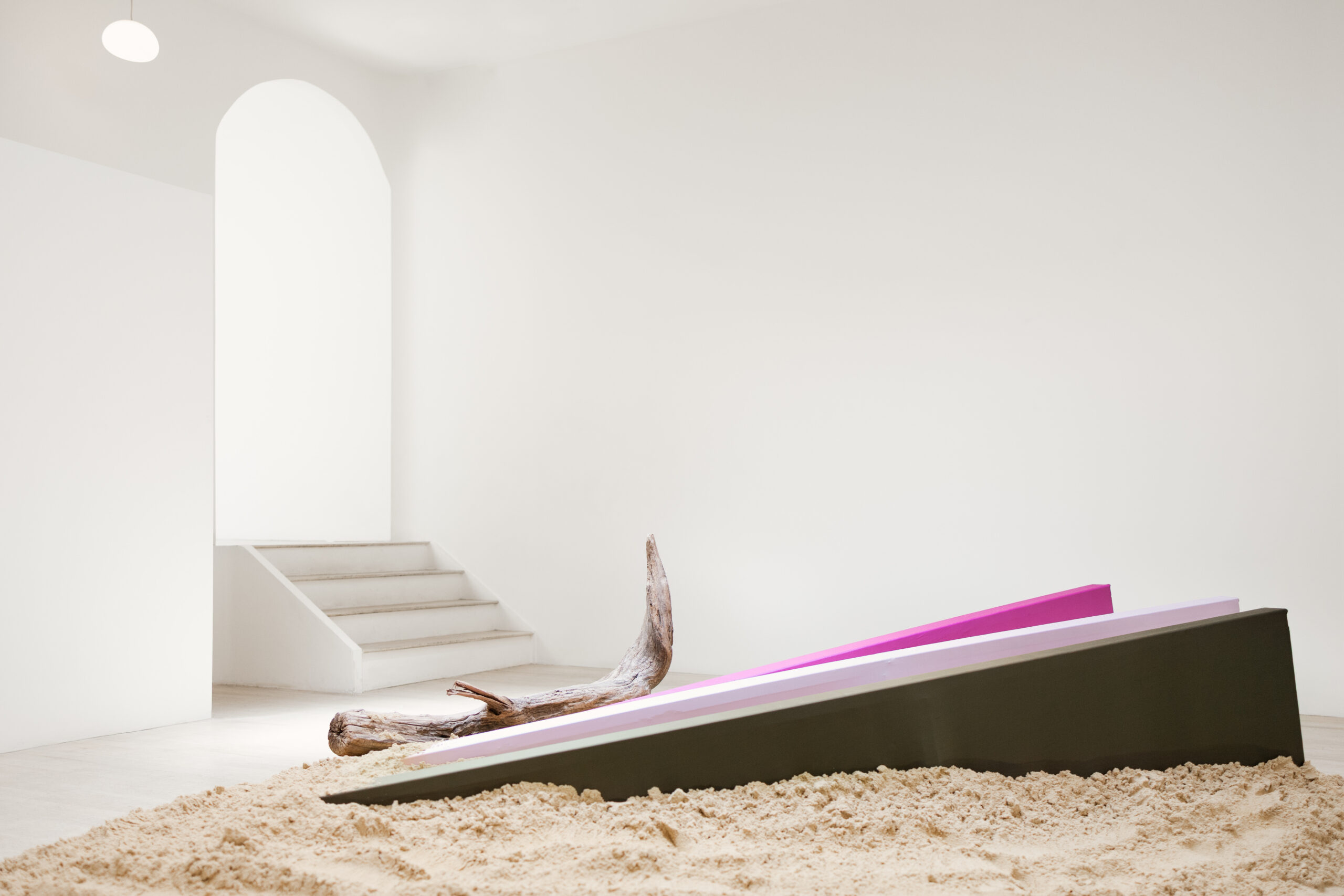
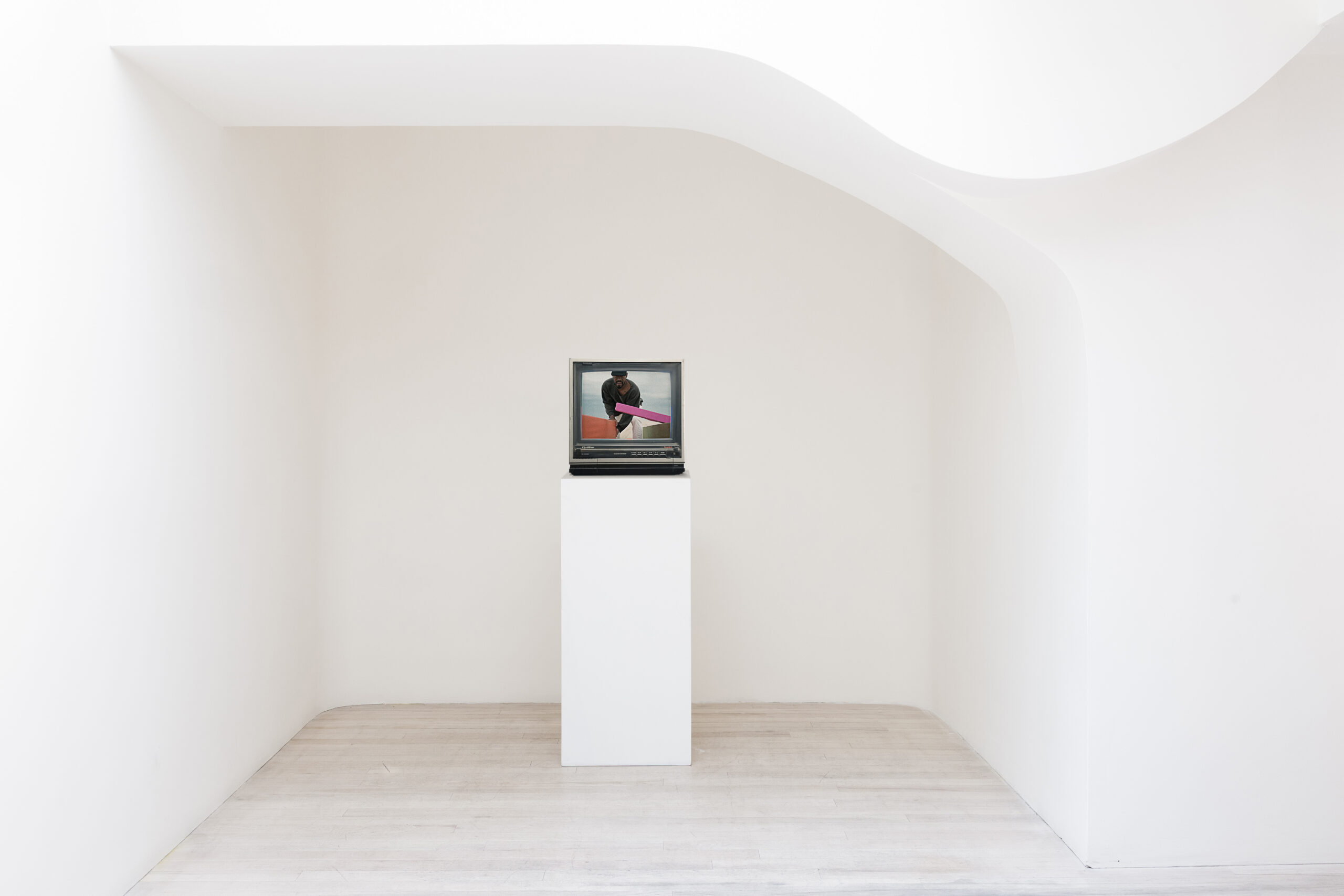
The exhibition also expands Perkins’ definition of the nonsite through new materials and forms. In the gallery’s back room, Chord, Perkins’ first indoor installation and a work conceived specifically for Nonsites Revisited, brings his post-totem structures into a new context beneath the gallery’s skylight. The installation allows the works to continue changing over the course of the exhibition, bringing a process that typically unfolds outdoors into the gallery itself. A video work, At The Oceans Edge, I Feel Like Everyone Else, further traces the movement between studio and landscape. Across painting, sculpture, performance, and moving image, each form grows from the same underlying philosophy.
Perkins’ practice remains in conversation with the histories of painting and Land Art, from the abstractions of Barnett Newman and Mark Rothko to the expanded practices of Robert Smithson, Robert Irwin, and James Turrell. Yet for Perkins, engaging these histories also means reconsidering them in the present. His nonsites build upon the legacy of Land Art while proposing a relationship to the landscape grounded in environmental responsibility.
The idea of sharing—authorship, land, and ultimately the planet itself—runs throughout Nonsites Revisited. In a moment of increasingly contested landscapes, resources, borders, and ideas of ownership, Perkins’ earlier proposition that Earth is the first object we share takes on renewed urgency. His nonsites return to something elemental: beneath the names, boundaries, and claims we impose upon the planet is one Earth that we all share.
“I think my work is successful not when it’s beautiful,” Perkins says, “but when it brings your attention back to nature. And that nature can either be the planet or that nature can be human nature.”
Hannah Traore Gallery is pleased to present Nonsites Revisited, the gallery’s second solo exhibition by New York-based artist James Perkins. Continuing Perkins’ decade-long exploration of the nonsite, a term originated by Robert Smithson in 1968, the exhibition expands a land-based practice concerned with the relationship between place, material, and human intervention. While the works in James’ first exhibition with the gallery, BURYING PAINTING, emerged primarily from Fire Island, Nonsites Revisited extends across a wider range of geographies. Works in the exhibition were shaped on Fire Island, in the Gulf of Mexico, the Sonoran Desert, the mountains and salt flats of Utah, and the middle of the Atlantic Ocean. A floor sculpture incorporates storm-fallen pine sourced from the Hudson Valley. Together, the works trace an evolution in Perkins’ approach to material, form, performance, and installation while returning the proposition at the heart of his practice: the Earth is the first object we share.
Perkins’ works begin as what he calls “post-totem structures”: silk stretched over wooden frames and situated outdoors for months or years. Buried in earth, submerged in water, or exposed across deserts, forests, mountains, and beaches, the works are shaped by sun, salt, wind, sand, soil, water, plants, and other environmental forces. Perkins’ interventions are limited to how he positions and repositions the structures within each landscape, allowing the environment itself to create the gestures that accumulate on the silk. Sustainability is embedded in this process: the structures are made from materials that can biodegrade if left in the landscape, their transformation continuing until Perkins chooses to preserve a particular moment as a work of art. Eventually, the silk is removed and re-stretched as a painting, carrying the physical record of the landscape in which it was made. For Perkins, this process also complicates the relationship between artist and environment: “There’s an element of them that’s much bigger than me,” he says, “which I would be proud to share the authorship with.”
In Nonsites Revisited, each landscape acts not simply as a setting but as a condition of the work. Perkins increasingly arrives at sites through invitation, allowing their geography, histories, and communities to shape both the work and his experience of making it. I’m Tied in Knots Over This and Life Line emerged from Nonsite: Atlantic Passage, during which Perkins’ silk canvases sailed with skipper Conrad Colman in the 2022 Route du Rhum, a 3,542-nautical-mile solo transatlantic race from Saint-Malo, France, to Pointe-à-Pitre, Guadeloupe. Carried aboard the racing sailboat throughout the 13-day passage, the silks were exposed to the wind, salt, and conditions of the open Atlantic. Other works emerged from the desert, the Gulf of Mexico, the mountains and salt flats of Utah, and Fire Island. In Engulfed in Love: An Eagle’s Ode to Lucio Fontana, three splits down the center of the silk were made by an eagle while the work was situated on Fire Island, evoking Lucio Fontana’s iconic slashed canvases. “All the sites, they’re working on me,” Perkins says. “Each site works on my practice. It works on me as an artist. It works on me as a human.” Across these distinct terrains, the works return to Perkins’ belief in the equal value of the landscapes from which they emerge.
BURYING PAINTING, Perkins described Earth as “the object that we all share,” adding, “I hope we can learn to share better.” Four years later, Nonsites Revisited continues that sentence. As his practice expands across increasingly varied landscapes, the nonsite becomes a means of considering the value we assign to different places and, by extension, to the people who inhabit them. “It’s this kind of equality of all landscapes, and this equality of all people, no matter what landscape they are from,” Perkins says. “My nonsites are this metaphor for trying to respect all lands equally.” Against a culture driven by immediacy and the demand for the new, Perkins embraces revisiting as a way for ideas, artworks, and our relationships to the Earth to deepen over time.
The exhibition also expands Perkins’ definition of the nonsite through new materials and forms. In the gallery’s back room, Chord, Perkins’ first indoor installation and a work conceived specifically for Nonsites Revisited, brings his post-totem structures into a new context beneath the gallery’s skylight. The installation allows the works to continue changing over the course of the exhibition, bringing a process that typically unfolds outdoors into the gallery itself. A video work, At The Oceans Edge, I Feel Like Everyone Else, further traces the movement between studio and landscape. Across painting, sculpture, performance, and moving image, each form grows from the same underlying philosophy.
Perkins’ practice remains in conversation with the histories of painting and Land Art, from the abstractions of Barnett Newman and Mark Rothko to the expanded practices of Robert Smithson, Robert Irwin, and James Turrell. Yet for Perkins, engaging these histories also means reconsidering them in the present. His nonsites build upon the legacy of Land Art while proposing a relationship to the landscape grounded in environmental responsibility.
The idea of sharing—authorship, land, and ultimately the planet itself—runs throughout Nonsites Revisited. In a moment of increasingly contested landscapes, resources, borders, and ideas of ownership, Perkins’ earlier proposition that Earth is the first object we share takes on renewed urgency. His nonsites return to something elemental: beneath the names, boundaries, and claims we impose upon the planet is one Earth that we all share.
“I think my work is successful not when it’s beautiful,” Perkins says, “but when it brings your attention back to nature. And that nature can either be the planet or that nature can be human nature.”