Lynn Bianchi is an American photographer and multimedia artist whose work has persistently expanded the boundaries of how the body, time, and perception can be represented. Over the course of her practice, she has built a distinctive visual language that combines sensuality with intellect, wit with rigor, and humor with vulnerability. Bianchi’s work defies easy categorization—she moves fluidly between still photography, video, and mixed media, constantly testing the limits of each medium and their capacity to hold emotion, irony, and truth.
Bianchi moved to New York City in 1968, a relocation that would become central to her creative identity. The city’s energy, diversity, and contradictions continue to inform her work. Her early years were marked by exploration—of self, of art-making, and of photography’s expressive potential. Though she began her career with little formal training, she was drawn to the darkroom and to the material processes of image-making. Her early works demonstrate a fascination with the tactile surface of prints: the silvery density of gelatin, the alchemy of gold toning, and the emotional resonance of hand-manipulated textures. Bianchi has described her process as both meditative and performative—an act of observation, but also of embodiment.
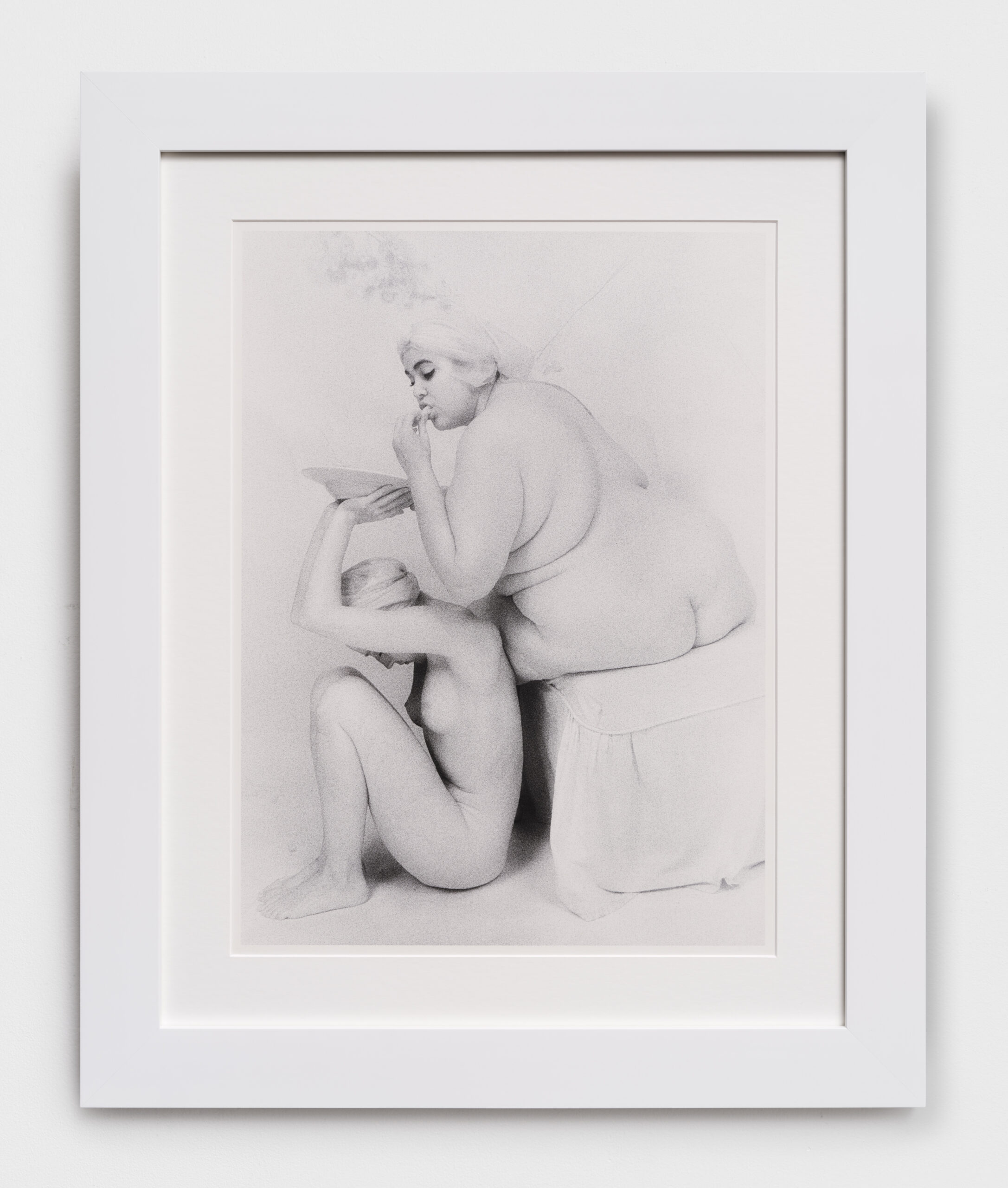
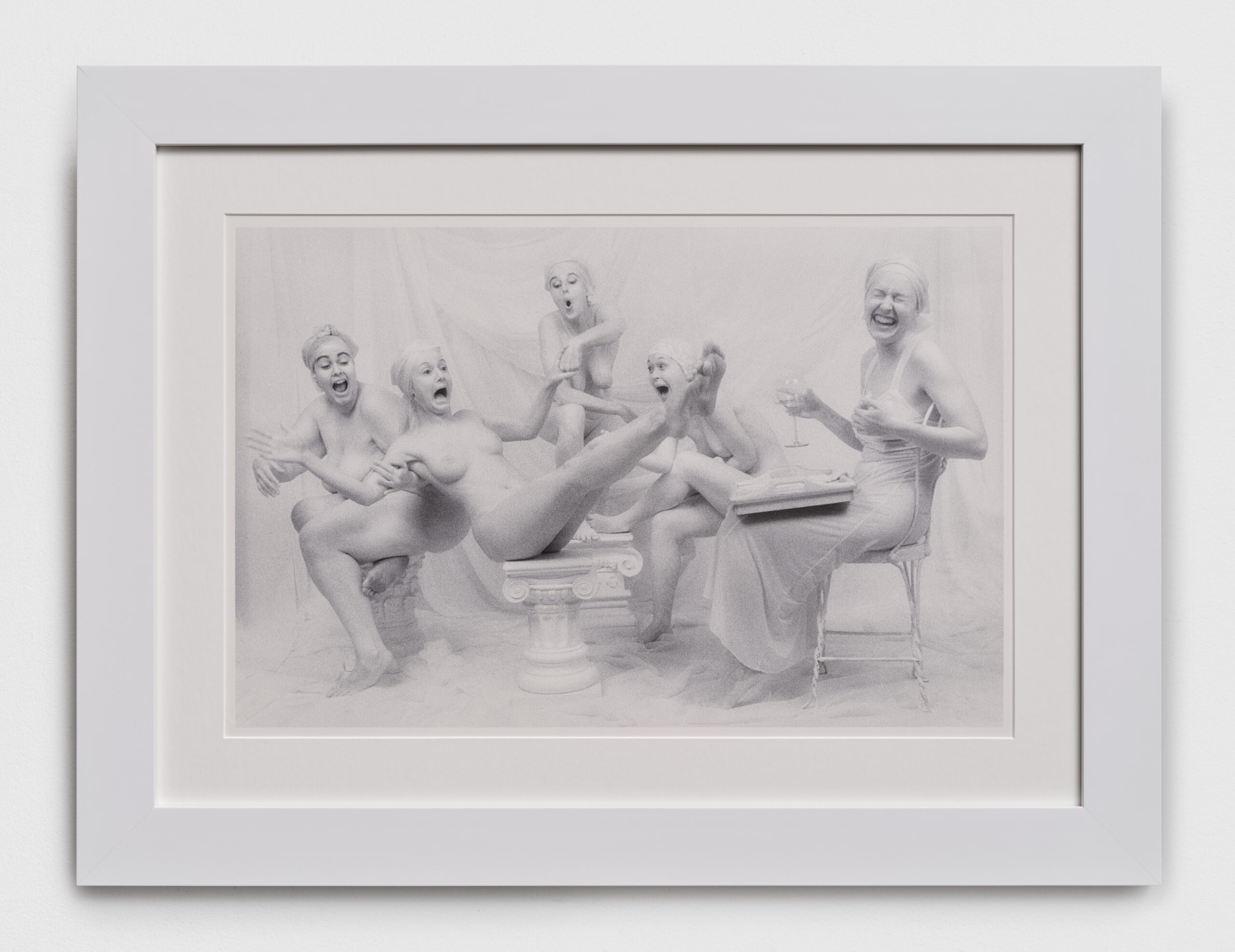
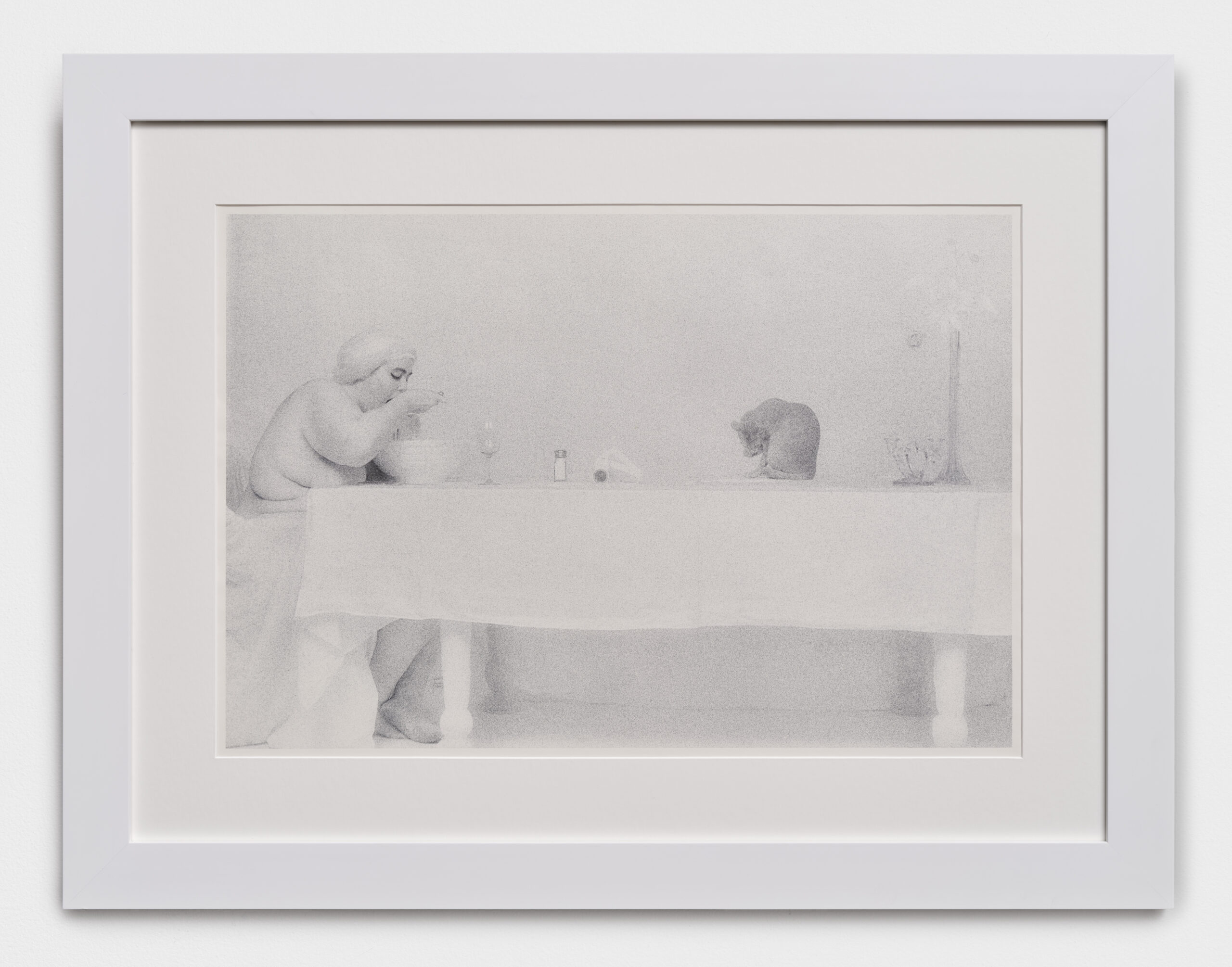
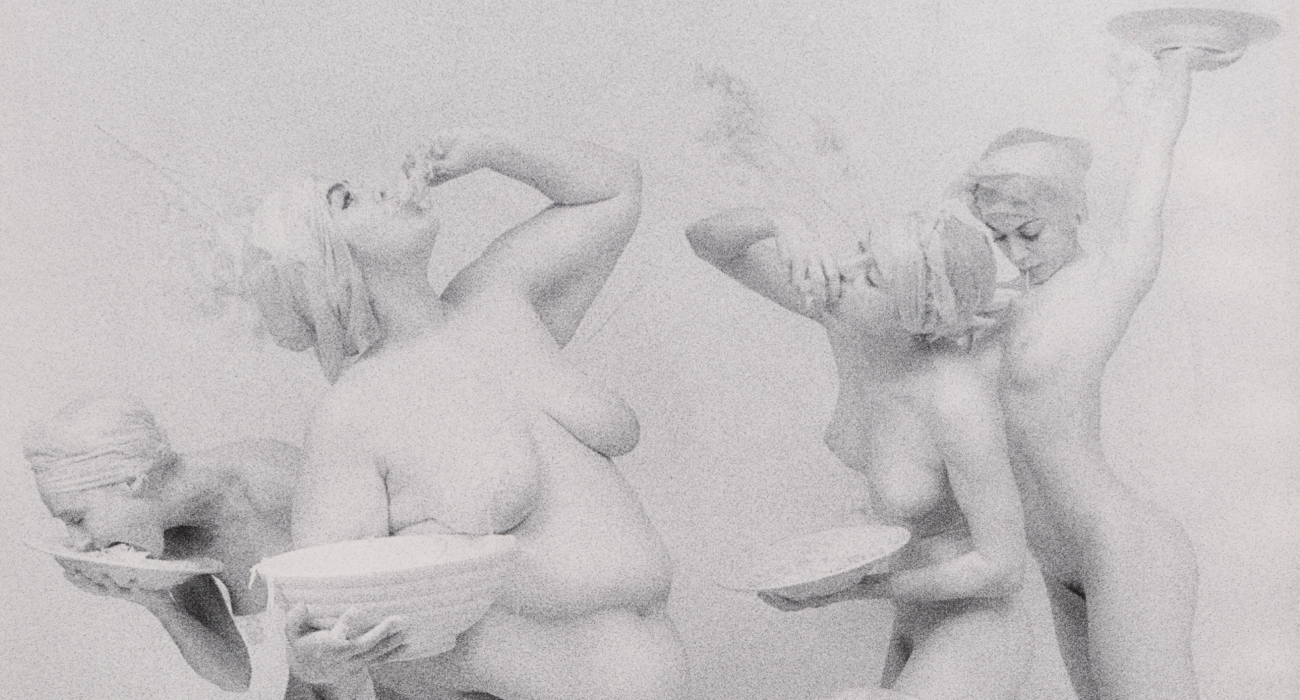
She came to prominence in the 1990s with her seminal series Heavy in White, a collection of silver-gelatin photographs depicting voluptuous nude women in intimate, surreal, and often humorous domestic settings. The figures—sometimes eating spaghetti, lounging on tables, or gathering ceremoniously—appear self-possessed and unapologetic. With their playful confidence, they subvert cultural ideals of female beauty and confront societal discomfort with the mature or imperfect body. Heavy in White has been recognized as a landmark body of work for its bold reclamation of the nude as a site of autonomy and joy. As Bianchi once noted, “My nudes are not erotic; they are humorous, powerful, and free.”
The series established many of the themes that continue to define her art: the tension between the sacred and the profane, the collision of satire and tenderness, and the liberation of the female body from the confines of objectification. In later series such as Geometrics and Women in Landscape, Bianchi extended these concerns into more abstract, architectural environments. Her models interact with constructed sets or collage-like backgrounds made from her own photographs of nature, suggesting both containment and transcendence. The human figure becomes part of a compositional geometry— a living element in a spatial equation about form, perception, and time.
From the early 2010s onward, Bianchi’s practice underwent a transformation as she began exploring video and movingimage work. She describes this as a natural progression, an attempt to “extend the still image into the dimension of time.” Her videos—often minimal, contemplative, and quietly absurd—revisit her enduring fascination with gesture, ritual, and the interplay between presence and absence. Works from this period, including her Beach Transparencies and Time Pieces series, blur the line between photography and sculpture. Using layers of plexiglass and transparency, she creates spatially complex compositions in which depth and surface coexist, reflecting her preoccupation with what lies beneath appearance. In these works, perception itself becomes her subject.
Her recent project New York Minute marks a return to the city that has shaped her artistic journey. Through photography and video, Bianchi captures moments of urban poetry—the gleam of the rooftops, the humor of a passerby, the solitude of a Brooklyn winter. Created partly during the isolation of the pandemic, this work reveals a quieter, more reflective side of her vision. It is a love letter to the city and to the act of seeing: observant, melancholic, yet filled with an irrepressible sense of play. This work participated in over 20 different film festivals around the world and was shown to the public at Cinema Village and Alamo Drafthouse in New York City.
Bianchi’s photographic work has been shown at Brooklyn Museum, Yale Art Gallery, Tokyo Metropolitan Museum of Photography, Musée de l’Elysée in Switzerland; Art Gallery of Ontario in Toronto among others. Servitude I from Heavy In White series was added to the collection of Walker Art Center in 2019. The work is also reproduced in the Walker’s catalogue The Expressionist Figure among such artists as Edgar Degas, Willem de Kooning, David Hockney, Pablo Picasso, etc.
Bianchi’s art has been featured in over forty publications, including The Huffington Post, Juxtapoz Magazine, Encyclopedia of Food and Culture, Vogue Italia, AnOther Magazine, Phot’Art International, and GEO. Lynn’s work resides in numerous private collections across the globe, including Manfred Heiting’s and Edward Norton’s, as well as in museum collections including Museum of Fine Arts in Houston, Texas, Biblioteque Nationale de France in Paris, Musée Ken Damy in Brescia, Italy and 21c Museum in Louisville, Kentucky among others.
She has recently exhibited in New York City at Salmagundi Club, The Untitled Space and 100 Sutton Studios among others. Lynn’s video projects are frequent winners of Best Experimental Awards and have been shown at various festivals all over the world, including New York Shorts International Film Festival, Odense International Film Festival, Montreal Independent Film Festival, Berlin Shorts Award, Moscow Shorts, Lund Architecture Film Festival, Budapest International Foto Awards, Tokyo International Foto Awards, New Earth International Film Festival in Poland, Toronto Film Magazine Festival.
Though her subjects and media have evolved, Bianchi’s work remains unified by a consistent sensibility: a trust in intuition, a fascination with transformation, and a refusal to separate beauty from humor or seriousness from play. She treats the body not as an object of scrutiny but as a vessel of meaning, capable of expressing strength, absurdity, grace, and desire all at once. In her later works, where she dissolves the boundaries between still and moving image, that same generosity of vision persists. Every frame holds a pulse; every surface — a shimmer of possibility.
Lynn Bianchi’s art stands as a celebration of imperfection and imagination. Her photographs invite viewers to look closer —to see what hides beyond the visible, what truth might lie beneath the sheen of the surface. Whether capturing the intimate gravity of a body at rest or the chaotic beauty of a city in motion, she reminds us that art, like life, is a negotiation between stillness and movement, perception and revelation, body and light.